
Artificial intelligence has moved beyond experimentation.
Businesses are now using AI to automate workflows, analyze data, improve customer experiences, build intelligent applications, and create entirely new digital products. But turning an AI idea into a reliable production system requires more than access to an AI model.
It requires the right combination of AI strategy, software engineering, data, integrations, security, deployment, and ongoing optimization.
That is why businesses increasingly work with an AI development company rather than attempting to build every AI capability internally.
India has become an important destination for AI development because businesses can access software engineering and AI expertise while working with teams experienced in delivering solutions for startups, SMEs, and enterprises. Current Indian AI development providers commonly offer services ranging from generative AI and LLM applications to RAG, AI agents, computer vision, predictive analytics, and enterprise integration.
But choosing the right AI development partner is not simply about finding the company with the longest list of AI services.
The real question is:
Can the company turn your business problem into a secure, scalable, measurable AI solution?
This guide explains what an AI development company does, what services you should expect, why businesses choose India for AI development, and how to evaluate potential development partners.
What Is an AI Development Company?
An AI development company designs, develops, integrates, and deploys software solutions that use artificial intelligence and machine learning technologies.
Depending on the business requirement, an AI development company may build:
Generative AI applications
AI-powered software
AI agents
Enterprise copilots
AI chatbots
RAG applications
Predictive analytics systems
Recommendation engines
Computer vision solutions
Natural language processing applications
Intelligent document processing systems
AI-powered automation
Custom machine learning models
A strong AI development company does more than connect an application to an AI API.
It should understand the complete lifecycle:
Business problem → AI strategy → Data → Architecture → Development → Integration → Testing → Deployment → Monitoring → Optimization
This distinction matters because an AI prototype can often be built quickly, while a reliable production AI system requires significantly more engineering.
What Does an AI Development Company Do?
An AI development partner typically helps businesses move from an initial idea to a production-ready AI solution.
1. AI Strategy and Consulting
Before development begins, the team should understand the business objective.
For example:
What problem are you trying to solve?
How much manual work is involved?
What data is available?
What systems need to be integrated?
What would success look like?
What level of automation is appropriate?
A good AI strategy helps prevent businesses from investing in AI simply because a technology is popular.
2. Generative AI Development
Generative AI can be used to create applications that work with text, documents, images, audio, and other forms of content.
Examples include:
AI assistants
Enterprise copilots
Content generation platforms
Document analysis
Knowledge assistants
AI search
Customer-service applications
3. LLM Application Development
Large language models can become part of business applications rather than operating as standalone chat interfaces.
An AI development company can integrate LLM capabilities into existing products and workflows using techniques such as structured outputs, tool calling, retrieval, evaluation, and guardrails.
4. RAG Development
Retrieval-Augmented Generation, or RAG, allows an AI application to retrieve relevant information from a business's knowledge sources before generating a response.
This can be useful for:
Internal knowledge assistants
Customer-support systems
Document search
Policy assistants
Product knowledge systems
Enterprise research tools
RAG is particularly valuable when AI needs to work with company-specific or frequently changing information.
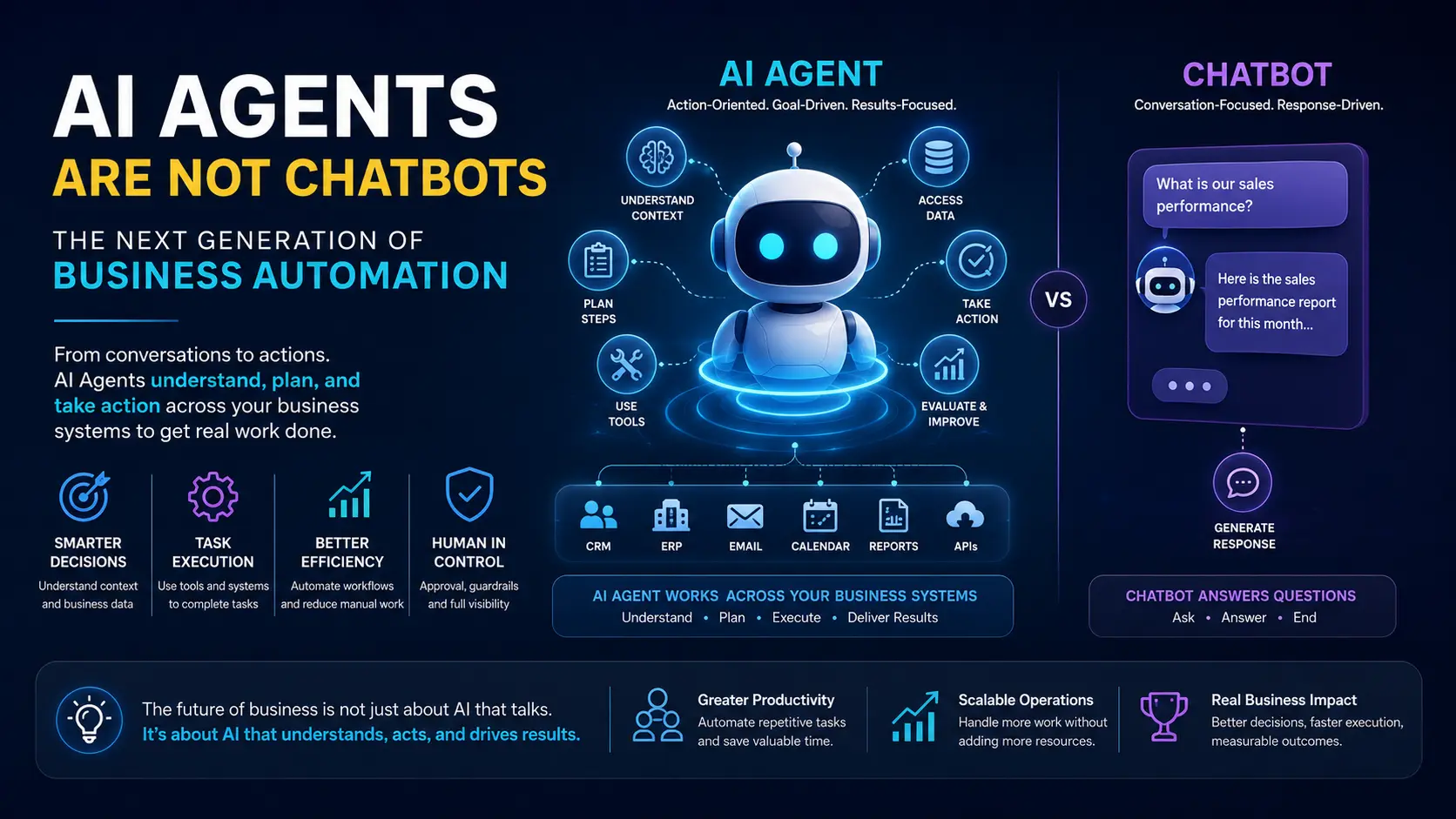
5. AI Agent Development
AI agents go beyond generating responses.
They can be designed to:
Understand a goal
Break the goal into tasks
Access tools or systems
Execute actions
Evaluate results
Escalate when necessary
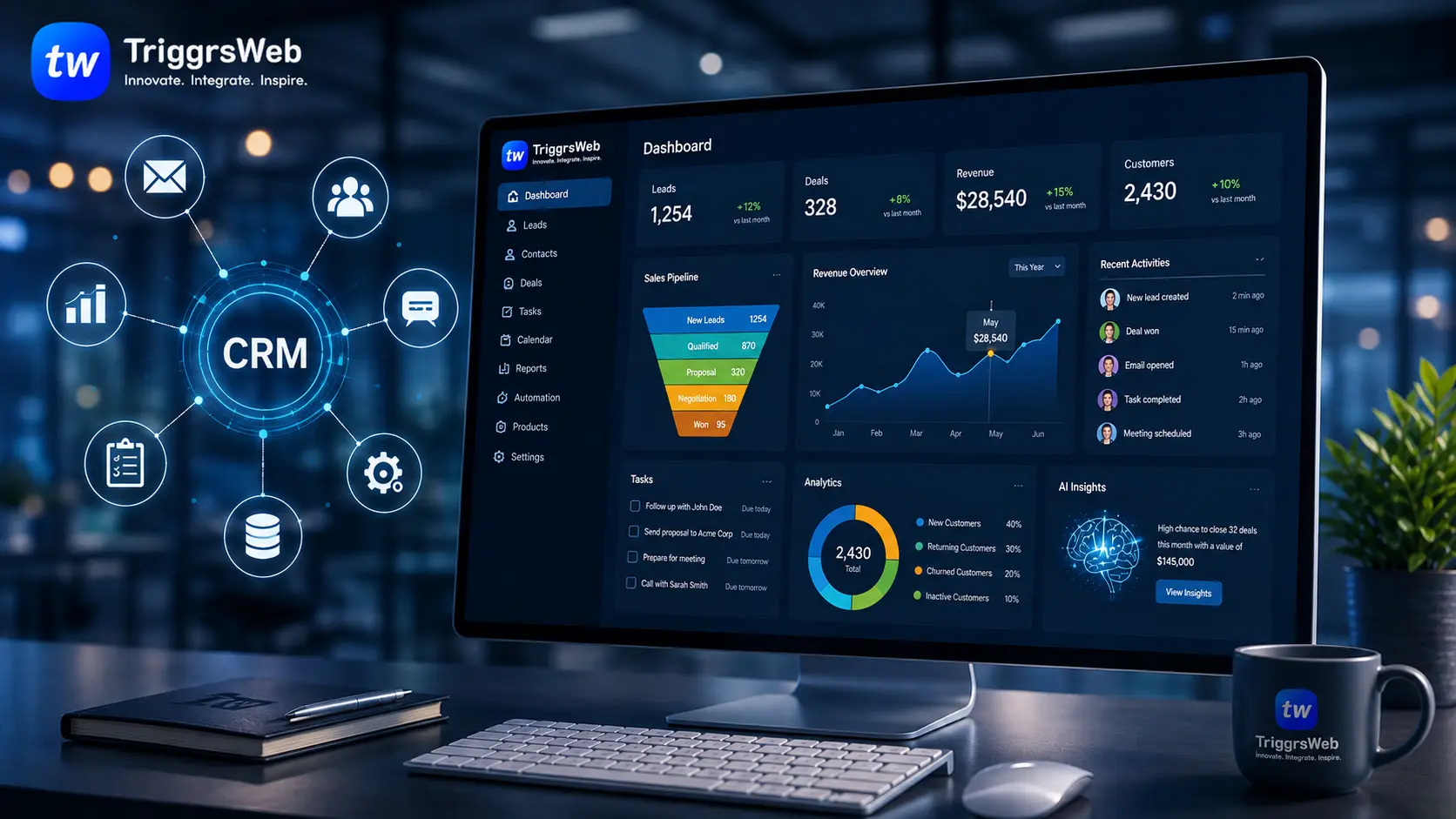
For businesses, this can enable intelligent workflow automation across CRM, ERP, support, finance, operations, and other systems.
This is closely related to the AI-agent and automation capabilities already discussed in TriggrsWeb's existing content.
6. Machine Learning Development
Not every AI project requires generative AI.
Traditional machine learning can be highly effective for:
Demand forecasting
Customer churn prediction
Fraud detection
Recommendation systems
Risk scoring
Predictive maintenance
Customer segmentation
The right technology should be selected based on the business problem rather than the popularity of a particular AI model.
7. Computer Vision Development
Computer vision enables software to interpret images and video.
Potential applications include:
Quality inspection
Object detection
Image classification
Document processing
Security monitoring
Medical image analysis
Retail analytics
Manufacturing inspection
8. AI Integration and Automation
Businesses rarely want AI to operate in isolation.
AI solutions often need to connect with existing:
CRMs
ERPs
Databases
Customer portals
APIs
Cloud platforms
Communication systems
Internal applications
Integration turns an AI capability into part of an actual business workflow.
9. AI Deployment and MLOps
Developing an AI model is only one part of the project.
Production systems also require:
Deployment infrastructure
Monitoring
Version management
Evaluation
Security
Performance optimization
Cost management
Model updates
This is why businesses should evaluate an AI development company based on its ability to support the entire AI lifecycle, not just initial development.
Why Choose an AI Development Company in India?
India has a large technology-services ecosystem and a deep pool of software and AI engineering talent.
Businesses working with Indian development companies can potentially benefit from:
Access to Technical Talent
Indian technology teams commonly work across software engineering, cloud infrastructure, data engineering, machine learning, and application development.
Cost Efficiency
Development costs can be competitive compared with building equivalent teams in higher-cost markets.
However, businesses should avoid selecting a partner based solely on the lowest hourly rate.
The important metric is total value delivered, including architecture quality, development speed, reliability, maintenance, and business outcomes.
Global Delivery Experience
Many Indian AI development companies work with international clients and distributed teams, making remote collaboration a standard part of the delivery model.
Flexible Engagement Models
Businesses can choose from different models depending on their requirements.
Common options include:
Fixed-scope AI project
AI proof of concept
Dedicated AI development team
Staff augmentation
End-to-end AI development
Long-term AI engineering partnership
What AI Development Services Should You Look For?
When evaluating an AI development company in India, look for capabilities that cover the complete development lifecycle.
A potential partner should ideally be able to provide:
CapabilityWhy It MattersAI consultingDefines the right use caseData engineeringPrepares reliable AI dataGenerative AIEnables modern AI applicationsLLM developmentBuilds language-based applicationsRAGConnects AI to business knowledgeAI agentsEnables intelligent task executionMachine learningSupports predictive use casesComputer visionHandles image/video intelligenceAI integrationConnects AI to existing systemsMLOpsSupports production deploymentSecurityProtects data and AI systemsMonitoringMeasures quality and performance
The best provider for your business depends on the specific capabilities required by your project.
How to Choose the Best AI Development Company in India
The phrase “best AI development company in India” can be misleading.
There is no universally best provider.
The right company depends on your industry, project complexity, budget, technical environment, and long-term objectives.
Use the following framework when evaluating potential partners.
1. Evaluate Their Technical Expertise
Ask what technologies and architectures they have actually implemented.
For example:
LLM applications
RAG systems
AI agents
Machine learning
Computer vision
Cloud AI
Enterprise integrations
MLOps
Do not evaluate expertise based solely on a list of buzzwords.
Ask for examples of production implementations.
2. Review Their Case Studies
Look for evidence that the company has solved problems similar to yours.
Strong case studies should explain:
The business problem
The solution
Technologies used
Implementation challenges
Business outcomes
A portfolio of AI demos is useful, but real-world production experience is more valuable.
3. Understand Their Development Process
A mature AI development company should have a structured process.
A typical process might include:
Discovery → Data Assessment → Architecture → Prototype → Development → Testing → Deployment → Monitoring
This reduces the risk of building a technically impressive system that does not solve the original business problem.
4. Ask About Data Security
AI applications often process sensitive business information.
Before selecting a provider, ask about:
Data storage
Access controls
Encryption
Authentication
Data retention
Model-provider policies
Audit logging
Compliance requirements
Security should be designed into the architecture from the beginning.
5. Understand Who Owns the IP
Clarify ownership of:
Source code
AI workflows
Custom models
Prompts
Integrations
Documentation
Data pipelines
Generated artifacts
Intellectual-property terms should be clear before development begins.
6. Ask About Post-Launch Support
AI systems require ongoing improvement.
Models change. Data changes. Business requirements change.
Ask whether the provider offers:
Monitoring
Bug fixes
Model optimization
Performance improvements
Security updates
Feature development
Technical support
A development partner should be capable of supporting the system after launch.
How Much Does AI Development Cost in India?
There is no single price for AI development.
The total cost depends on:
Project complexity
Number of integrations
Data requirements
AI model requirements
Application complexity
Security requirements
Development team size
Deployment architecture
Ongoing support
A simple AI proof of concept can require significantly less investment than a production enterprise AI platform.
Instead of asking only:
“How much does AI development cost?”
businesses should ask:
“What level of AI solution do we need to achieve the desired business outcome?”
This produces a more realistic project estimate.
AI Development Project Lifecycle
A typical AI development project can follow these stages.
Stage 1: Business Discovery
Understand the business problem and define measurable objectives.
Stage 2: Data Assessment
Identify available data sources, quality issues, access requirements, and processing needs.
Stage 3: Solution Architecture
Determine whether the solution should use:
Traditional machine learning
Generative AI
RAG
AI agents
Rules-based automation
Or a combination of technologies
Stage 4: Proof of Concept
Build a focused prototype to validate technical feasibility and business value.
Stage 5: Product Development
Turn the validated concept into a robust application.
Stage 6: Integration
Connect the AI system to existing business applications and workflows.
Stage 7: Testing and Evaluation
Evaluate accuracy, reliability, security, latency, cost, and user experience.
Stage 8: Production Deployment
Deploy the system into the organization's operational environment.
Stage 9: Monitoring and Optimization
Track performance and continuously improve the system.
AI Development vs AI Consulting
These services are related but different.
AI consulting focuses primarily on strategy, use-case identification, architecture, and implementation planning.
AI development focuses on actually building and deploying the solution.
Some businesses only need strategic guidance.
Others need a complete partner that can move from strategy to production.
For larger AI initiatives, having strategy and development capabilities under one team can reduce handoff problems between consulting and engineering teams.
Why Businesses Should Avoid Building AI Just for the Sake of AI
One of the biggest mistakes organizations can make is starting with technology instead of a business problem.
For example:
“We need an AI chatbot.”
is not necessarily a business objective.
A better starting point is:
“Our support team spends thousands of hours each month answering repetitive questions. We want to reduce response time while maintaining service quality.”
The second statement creates measurable criteria for the AI project.
AI development should therefore begin with business outcomes, not technology trends.
Questions to Ask an AI Development Company Before Hiring
Before signing a contract, ask:
Have you built production AI systems similar to ours?
Which AI architectures would you recommend for our use case?
How will you evaluate AI accuracy?
How will our data be protected?
What systems can you integrate with?
Who owns the source code and intellectual property?
How will the system be monitored after deployment?
What happens when the AI produces an incorrect result?
What is the expected development timeline?
What ongoing support is included?
Can you provide a proof of concept first?
How will you measure business ROI?
The answers can reveal much more than a company's marketing claims.
The Future of AI Development
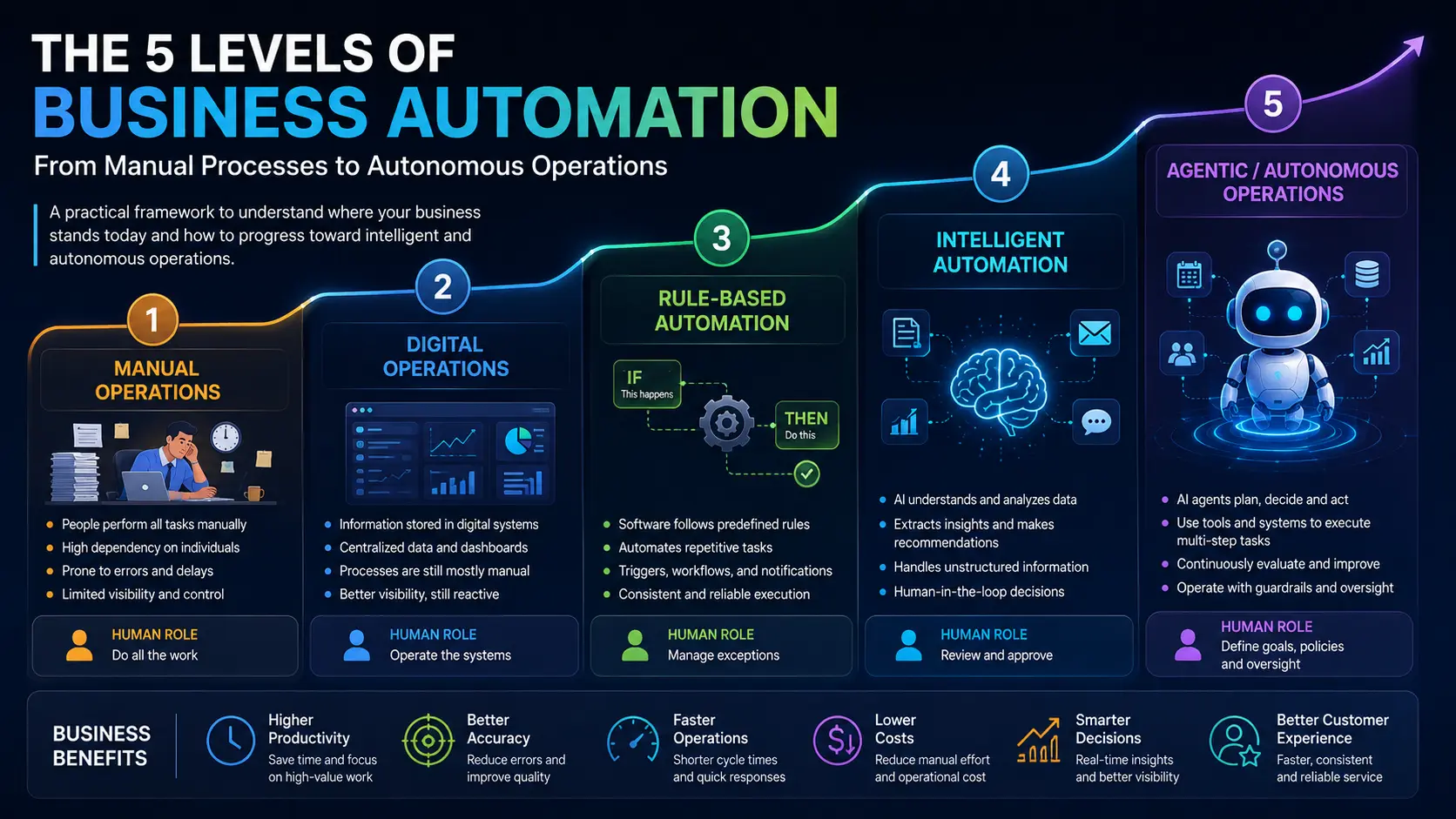
AI development is moving from isolated applications toward intelligent systems embedded throughout business operations.
The next generation of enterprise AI will increasingly combine:
Generative AI
AI agents
Workflow automation
Enterprise data
Traditional software
Machine learning
Human oversight
This means businesses will increasingly need AI partners that understand both AI engineering and business software development.
The strongest solutions will not simply generate text or images.
They will help businesses understand information, make decisions, execute tasks, and improve operations.
Why TriggrsWeb for AI Development?
TriggrsWeb can position its AI development offering around a business-first approach: understanding the organization's workflows, identifying high-value AI opportunities, building the required technology, and integrating it into existing operations.
Instead of treating AI as a standalone feature, the objective should be to create intelligent systems that deliver measurable operational value.
Whether the requirement involves AI applications, intelligent automation, AI agents, enterprise integrations, or broader digital transformation, the development process should remain focused on the underlying business outcome.
Key Takeaways
An AI development company helps businesses design, build, integrate, and deploy AI-powered solutions.
AI development can include generative AI, LLMs, RAG, AI agents, machine learning, computer vision, and intelligent automation.
India offers access to a large technology talent ecosystem and competitive development models.
The cheapest AI development company is not necessarily the best choice.
Production experience, security, architecture, integrations, and post-launch support matter.
Businesses should choose AI technology based on the problem they are solving.
A successful AI project should have measurable business outcomes.
The right AI development partner can help move an organization from AI experimentation to production-grade intelligent systems.
Frequently Asked Questions
What does an AI development company do?
An AI development company builds artificial intelligence solutions for businesses, including AI applications, LLM systems, AI agents, machine learning models, computer vision systems, intelligent automation, and AI integrations.
Why hire an AI development company in India?
Businesses may choose an Indian AI development company for access to technical talent, flexible engagement models, global delivery experience, and potentially competitive development costs.
How much does AI development cost in India?
AI development costs vary significantly based on the project's complexity, data requirements, integrations, security requirements, AI architecture, and ongoing support needs.
How long does it take to build an AI solution?
A basic proof of concept may take considerably less time than a production enterprise AI system. The timeline depends on the use case, data readiness, integrations, testing requirements, and deployment architecture.
What AI technologies should an AI development company offer?
Depending on your requirements, useful capabilities can include generative AI, LLM development, RAG, AI agents, machine learning, computer vision, NLP, AI integration, automation, and MLOps.
How do I choose an AI development company in India?
Evaluate technical expertise, relevant case studies, development methodology, security practices, communication, intellectual-property terms, pricing, and post-launch support. Most importantly, verify that the company can connect AI technology to measurable business outcomes.
Conclusion
Choosing an AI development company is an important technology and business decision.
The right partner should not simply build an AI prototype. It should help you identify the right opportunity, select an appropriate architecture, work with your data, integrate the solution with your systems, deploy it securely, and continuously improve its performance.
For businesses evaluating AI development in India, the strongest approach is to compare providers based on real technical capability, production experience, security, scalability, and measurable business value.
AI is becoming an increasingly important part of modern business software.
The organizations that approach AI development strategically will be better positioned to turn that technology into a sustainable competitive advantage.