
The insurance industry is undergoing a major shift. Insurers are no longer competing only on premiums, products, and distribution. Increasingly, they are competing on how quickly they can process claims, assess risk, respond to customers, detect fraud, and turn operational data into better decisions.
At the center of this transformation are modern insurance industry solutions powered by artificial intelligence, automation, data analytics, cloud technologies, and integrated business systems.
Traditional insurance organizations often operate across multiple systems for policy administration, claims, underwriting, customer service, finance, and compliance. When these systems do not communicate effectively, employees spend significant time moving information between applications, reviewing documents manually, and resolving data inconsistencies.
Modern technology can change this model.
AI can help employees analyze information and make faster decisions. Automation can remove repetitive steps from workflows. Data analytics can turn large volumes of policy and claims data into actionable insights. Integrated platforms can connect systems that previously operated in isolation.
The result is an insurance operation that can become faster, more data-driven, and more responsive without simply adding more manual work.
What Are Insurance Industry Solutions?
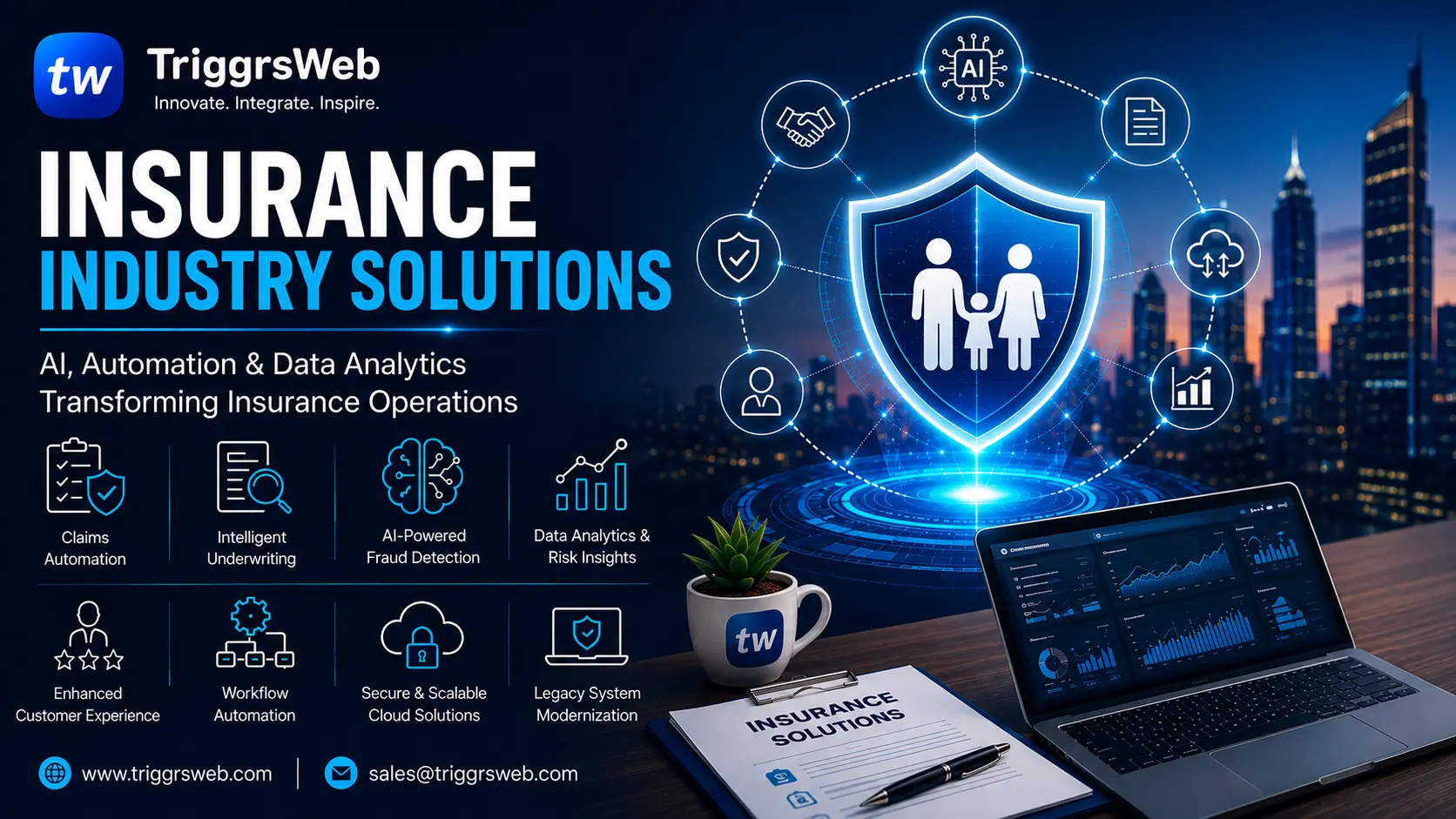
Insurance industry solutions are technology platforms, applications, integrations, and intelligent workflows designed to address the specific operational and business requirements of insurance organizations.
Depending on the insurer's needs, these solutions can support areas such as:
Claims processing and automation
Underwriting
Policy administration
Fraud detection
Customer service
Insurance document processing
Risk analytics
Workflow management
Customer relationship management
Data integration
Regulatory and compliance processes
Legacy-system modernization
AI-powered decision support
The important distinction is that an effective insurance technology strategy is not simply about introducing another software tool.
It is about connecting people, processes, data, and technology so that the organization can operate more efficiently.
Why Insurance Companies Are Investing in Digital Transformation
Insurance generates enormous amounts of structured and unstructured information.
A single claim, for example, may involve policy information, customer details, forms, invoices, photographs, correspondence, assessment reports, and other supporting documents.
When this information is handled manually, several problems can emerge:
Slow processing times
Duplicate data entry
Human errors
Limited visibility across departments
Higher operational costs
Delayed customer communication
Difficulty identifying suspicious activity
Inconsistent decision-making
Digital transformation allows insurers to redesign these processes.
Instead of simply digitizing an existing manual workflow, insurers can use automation and AI to rethink how work moves through the organization.
1. AI-Powered Insurance Claims Processing
Claims are one of the most important areas where technology can improve insurance operations.
Traditional claims processing can require employees to review documents, validate information, communicate with customers, check policy details, and coordinate with multiple internal or external parties.
AI and automation can assist with many of these activities.
For example, an intelligent claims workflow can:
Receive a claim through a digital channel.
Extract information from submitted documents.
Validate relevant policy information.
Classify the claim.
Identify missing information.
Route the claim to the appropriate team.
Flag potentially suspicious claims.
Provide employees with relevant information for review.
Trigger customer notifications automatically.
This does not necessarily mean removing humans from the claims process.
Instead, technology can handle repetitive information-processing tasks while experienced claims professionals focus on exceptions, complex cases, and decisions requiring human judgment.
The potential benefits
Insurance claims automation can help organizations reduce processing time, improve consistency, and provide customers with faster updates.
It can also create a more transparent workflow because every stage of the claim can be tracked digitally.
2. Intelligent Underwriting Solutions
Underwriting depends heavily on information.
Underwriters may need to evaluate customer data, historical records, risk indicators, documents, external information, and internal guidelines before making a decision.
AI and data analytics can help organize and analyze this information more efficiently.
An intelligent underwriting solution can support:
Risk assessment
Data aggregation
Document analysis
Risk classification
Decision support
Historical trend analysis
Workflow routing
Exception identification
The goal is not simply to automate underwriting decisions.
A better approach is to give underwriters better information at the right time, allowing them to make more informed decisions while reducing repetitive work.
3. Insurance Fraud Detection and Risk Analytics
Fraud can create significant financial and operational challenges for insurance organizations.
Traditional rule-based systems can identify known patterns, but increasingly sophisticated fraud requires insurers to examine relationships and patterns across large datasets.
Machine learning and advanced analytics can help identify unusual behavior, inconsistencies, and patterns that may require further investigation.
For example, an analytics system could analyze:
Claim frequency
Claim history
Policy behavior
Customer relationships
Geographic patterns
Transaction information
Timing and behavioral patterns
Rather than automatically labeling every unusual claim as fraudulent, the system can prioritize cases for investigation.
This creates a risk-based workflow where investigators can focus their attention on higher-priority cases.
4. Insurance Workflow Automation
Not every insurance technology challenge requires AI.
Many operational processes can benefit from straightforward workflow automation.
Examples include:
New customer onboarding
Document collection
Approval workflows
Policy renewals
Customer notifications
Internal task assignments
Compliance checks
Data synchronization
Escalation processes
Automation is particularly valuable when a process is repetitive, follows predictable rules, and involves multiple handoffs.
The best insurance automation strategy therefore combines traditional workflow automation with AI where intelligence and interpretation are actually required.
5. Insurance Document Processing
Insurance organizations work with large volumes of documents.
These may include:
Policy documents
Claim forms
Identification documents
Medical or assessment records
Invoices
Inspection reports
Correspondence
Supporting evidence
Manual document processing can become a bottleneck.
AI-powered document processing can extract relevant information, classify documents, identify missing fields, and route information into downstream workflows.
This can reduce repetitive data-entry work and make information available to employees faster.
The real value comes when document intelligence is connected to the rest of the insurance workflow rather than operating as an isolated OCR tool.
6. Data Analytics for Insurance Companies
Insurance companies already possess valuable data. The challenge is often turning that data into timely business decisions.
Insurance data analytics can help organizations understand:
Claims trends
Customer behavior
Policy performance
Risk patterns
Operational efficiency
Customer retention
Revenue performance
Fraud indicators
Product performance
With the right data architecture, decision-makers can move from retrospective reporting toward more proactive analysis.
For example, instead of asking only:
How many claims did we process last month?
an organization can begin asking:
Which claim categories are increasing, why are they increasing, and where should operational resources be allocated?
That shift from reporting to decision intelligence can create significantly more business value.
7. Connected Insurance CRM and Customer Experience
Customer expectations have changed across industries, including insurance.
Customers increasingly expect digital communication, faster responses, self-service options, and visibility into the status of their requests.
An insurance CRM can provide a centralized view of customer interactions across channels.
When CRM systems are integrated with policy, claims, and other business systems, customer-service teams can access more complete information without repeatedly asking customers for details that the organization already possesses.
Technology can support:
Customer portals
Automated notifications
Service requests
Lead management
Customer segmentation
Personalized communication
Case management
Interaction history
The objective is not simply to install a CRM.
The objective is to create a connected customer experience.
8. Modernizing Legacy Insurance Systems
Legacy systems remain one of the biggest technology challenges for established insurers.
Replacing a critical system all at once can be expensive and risky. At the same time, continuing to operate disconnected legacy infrastructure can make innovation increasingly difficult.
A modernization strategy can involve:
API-based integration
Cloud migration
Data modernization
Modular application architecture
Workflow automation
Modern customer-facing applications
Gradual replacement of legacy components
A phased approach can allow an insurer to modernize critical capabilities without attempting to transform the entire technology environment simultaneously.
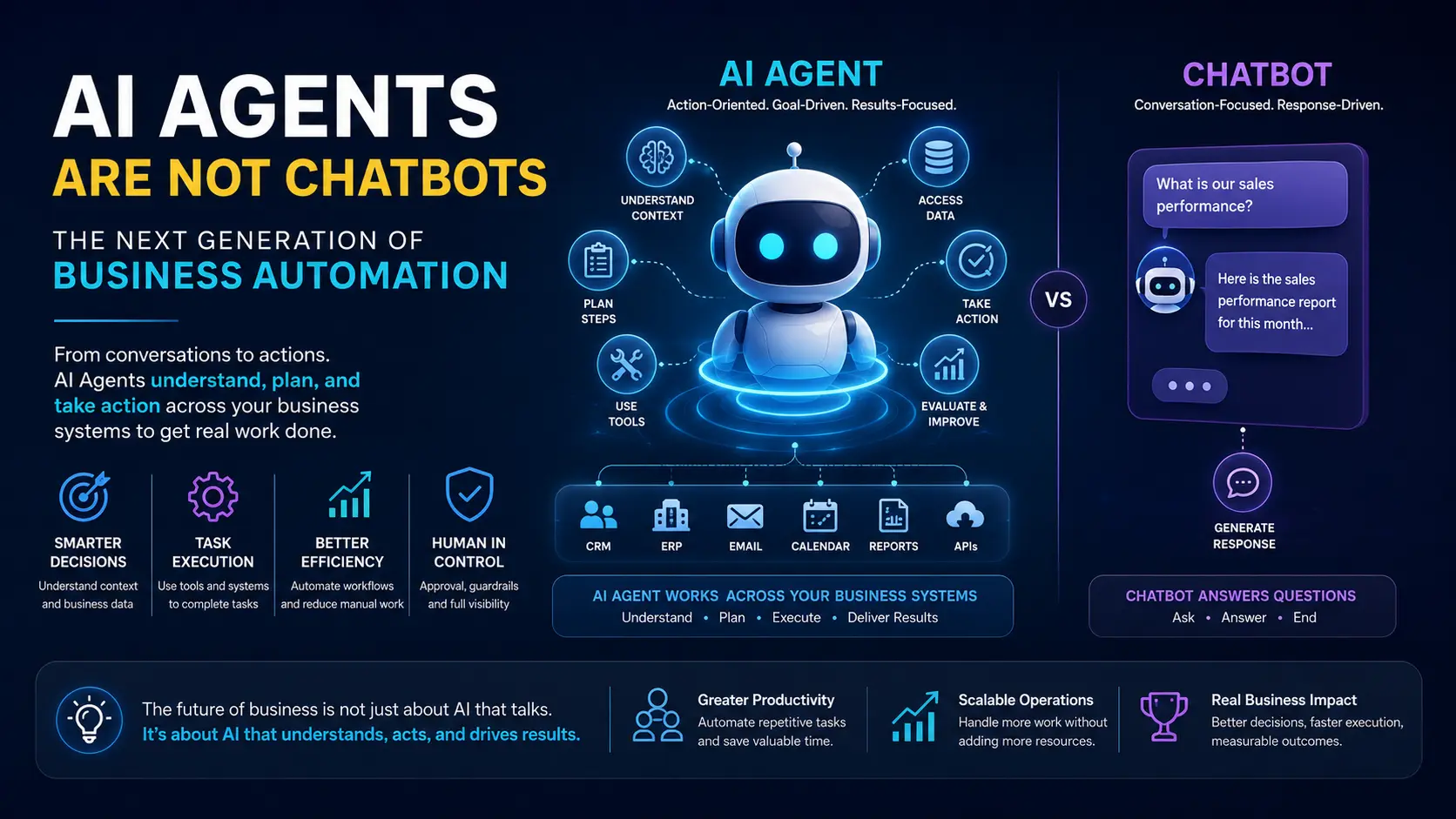
9. AI Agents and the Next Stage of Insurance Automation
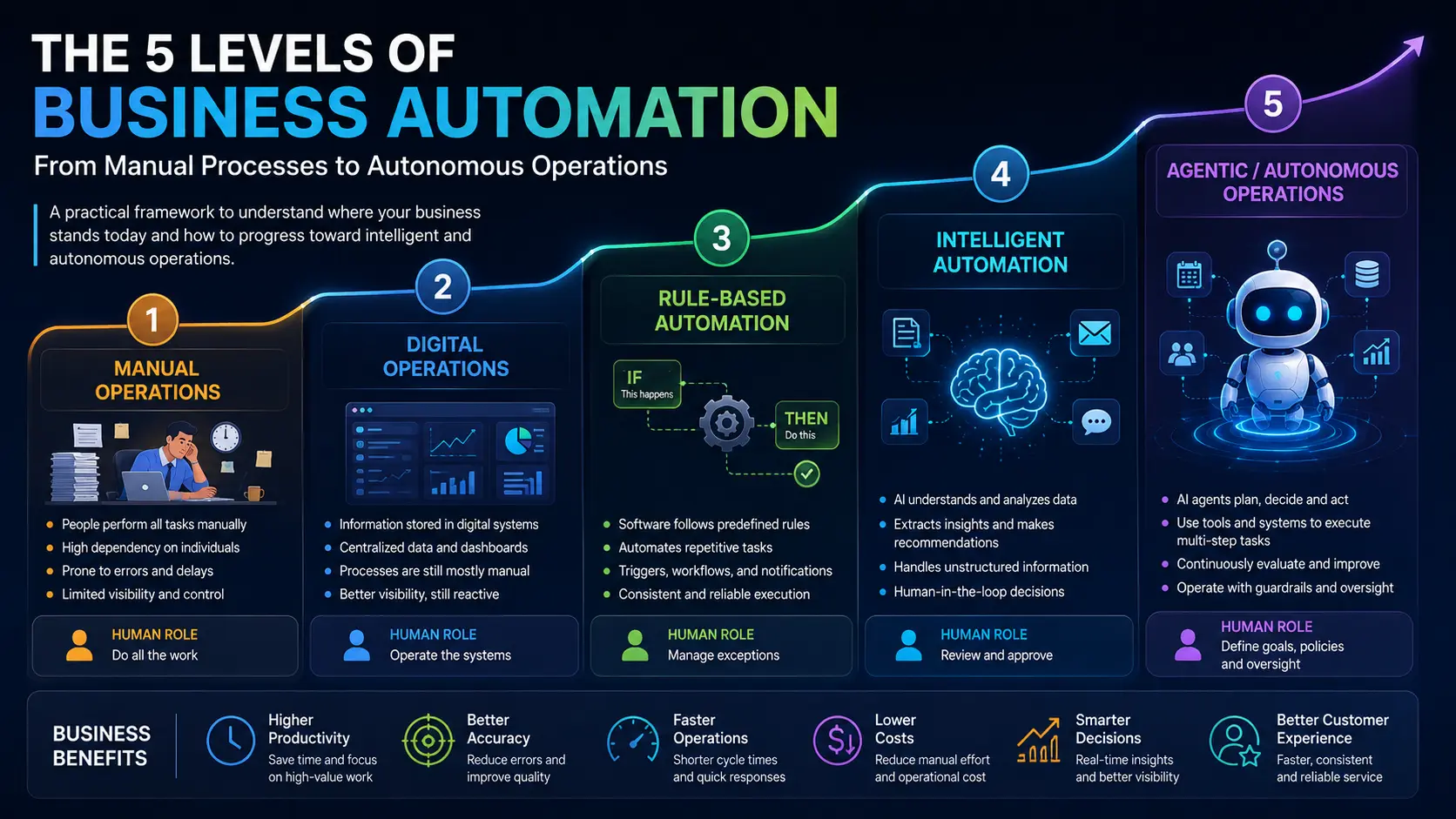
The next evolution of insurance automation is moving beyond simple rule-based workflows.
AI agents can potentially help coordinate multi-step tasks by understanding context, accessing approved systems, and determining what action should happen next.
For example, an AI-assisted insurance workflow could help an employee:
Review a new case
Gather relevant information
Summarize documents
Identify missing data
Check predefined business rules
Prepare a recommendation
Escalate an exception
Draft customer communication
Human oversight remains important, particularly for decisions involving risk, compliance, financial impact, or customer outcomes.
The opportunity is to create human-in-the-loop insurance operations, where AI handles information-heavy tasks while people retain appropriate control over important decisions.
How to Choose the Right Insurance Technology Solution
There is no single technology solution that fits every insurer.
Before selecting a platform or development partner, organizations should evaluate the underlying business problem.
Start with the process
Identify where employees spend the most time.
Ask:
Which processes involve repetitive manual work?
Where are customers experiencing delays?
Which workflows involve multiple systems?
Where are errors occurring?
Which decisions require better data?
Which processes create the greatest operational cost?
Evaluate integration requirements
An insurance solution should not become another isolated application.
Consider how it will connect with:
Policy systems
Claims platforms
CRM
ERP
Data warehouses
Customer portals
Identity systems
External data providers
Consider scalability and security
Insurance technology handles sensitive customer and business information.
Security, access control, data governance, auditability, scalability, and regulatory requirements should therefore be considered from the beginning rather than added later.
Measure business outcomes
Technology projects should have measurable objectives.
Depending on the use case, organizations may measure:
Claims processing time
Cost per claim
Manual processing volume
Customer response time
Employee productivity
Fraud investigation efficiency
Data accuracy
Customer satisfaction
The best solution is not necessarily the one with the most features. It is the one that produces measurable improvement in an important business process.
Build vs. Buy: What Should Insurance Companies Choose?
Insurance organizations often face a choice between buying an existing product and building a customized solution.
A packaged platform can make sense when standardized functionality meets the organization's requirements.
Custom development can become more attractive when the insurer needs:
Specialized workflows
Integration with proprietary systems
Custom analytics
Unique customer experiences
Industry-specific automation
AI-powered capabilities
Gradual modernization of existing systems
In many cases, a hybrid approach can be effective: use established platforms for standardized capabilities while developing custom applications and integrations around the organization's unique processes.
A Practical Roadmap for Insurance Digital Transformation
Insurance transformation does not have to happen all at once.
A practical roadmap can begin with five stages.
Stage 1: Identify high-value processes
Map operational workflows and identify bottlenecks, repetitive activities, and customer pain points.
Stage 2: Consolidate and connect data
Determine where important information lives and identify integration gaps.
Stage 3: Automate predictable work
Use workflow automation for repetitive, rules-based processes.
Stage 4: Introduce AI where it adds intelligence
Apply AI to document understanding, classification, analytics, decision support, fraud detection, and other areas where interpretation is required.
Stage 5: Measure and continuously improve
Track business outcomes and refine workflows based on real operational data.
This approach reduces the risk of treating digital transformation as a single technology project.
Key Takeaways
Modern insurance industry solutions are increasingly built around the combination of AI, automation, analytics, integration, and modern software architecture.
The biggest opportunities are not limited to one department. Insurers can improve claims, underwriting, fraud detection, customer service, document processing, data analytics, and legacy-system integration through carefully designed technology solutions.
The most effective transformation strategy starts with the business problem—not the technology.
Organizations should identify high-value processes, connect fragmented systems, automate repetitive work, introduce AI where it creates genuine value, and continuously measure the resulting business impact.
How TriggrsWeb Can Help Insurance Companies
Insurance organizations often need more than an off-the-shelf application. They need technology that fits their existing systems, workflows, data environment, and long-term transformation strategy.
TriggrsWeb can support insurance organizations across areas such as custom software development, AI solutions, workflow automation, data analytics, cloud technologies, and enterprise system integration.
The starting point should be a clear understanding of the operational challenge.
From there, the right technology architecture can be designed around measurable outcomes—whether the goal is improving claims processing, modernizing legacy systems, strengthening analytics, automating workflows, or creating more connected customer experiences.
The future of insurance technology is not simply about adding more software. It is about building connected, intelligent operations that help insurance organizations make better decisions and serve customers more effectively.