
AI development is becoming a strategic investment for businesses looking to automate operations, improve customer experiences, analyze data, and build intelligent digital products.
But one of the first questions businesses ask before starting an AI project is:
How much does AI development cost in India?
There is no single price because an AI chatbot, an AI-powered SaaS product, an enterprise AI platform, and an autonomous AI agent can require completely different levels of engineering, data, integrations, infrastructure, and ongoing support.
The right way to estimate AI development cost is therefore to understand what you are building, how complex it is, what data it needs, which systems it must integrate with, and what level of reliability and security the business requires.
This guide explains the major factors that influence AI development pricing in India and how businesses can create a realistic AI development budget.
How Much Does AI Development Cost in India?
AI development costs vary depending on the scope and complexity of the project.
A useful way to think about project budgets is by development stage:
Project Type: AI Proof of Concept, Custom AI Application, Agentic AI applications
Typical Complexity: High, Medium, Low
These categories are more useful than quoting one universal number because two projects described as an “AI application” can have completely different requirements.
For an accurate estimate, the development partner should first understand the business case, data, integrations, AI architecture, security requirements, and expected scale.
What Determines AI Development Cost?
Several factors can significantly change the total cost of an AI project.
1. Type of AI Solution
The technology behind the solution is one of the biggest cost factors.
For example, a business might need:
Generative AI application
LLM-powered chatbot
RAG application
AI agent
Predictive analytics platform
Recommendation engine
Computer vision system
Intelligent document processing
AI-powered workflow automation
A straightforward AI application using an existing model can require less engineering than a complex enterprise system involving multiple AI components.
2. Project Complexity
The number of features, workflows, user roles, business rules, and integrations directly affects development effort.
A simple internal AI assistant may have a relatively limited scope.
An enterprise AI platform might require:
Multiple user roles
Complex workflows
Custom dashboards
AI evaluation
Enterprise authentication
Data pipelines
Multiple integrations
Audit logging
Monitoring
Human approval processes
The more components involved, the greater the development effort.
3. AI Model Requirements
Businesses can use existing foundation models, fine-tuned models, traditional machine learning models, or combinations of different approaches.
The choice depends on the use case.
In many projects, using an existing model through an API can reduce the initial development effort compared with developing and training a model from scratch.
However, model selection also affects ongoing inference and infrastructure costs.
4. Data Requirements
AI systems are only as useful as the data they can access and process.
Project costs can increase when businesses need:
Data collection
Data cleaning
Data labeling
Data transformation
Data pipelines
Knowledge-base preparation
Vector databases
Data governance
For enterprise AI, data engineering can become a significant part of the overall project.
5. Integrations
An AI solution rarely operates independently.
It may need to connect with:
CRM systems
ERP platforms
Databases
Payment systems
Customer portals
Internal applications
APIs
Cloud platforms
Communication tools
Each integration adds development, testing, security, and maintenance requirements.
6. Security and Compliance
AI applications that process sensitive business or customer information require stronger security controls.
Depending on the project, this may include:
Authentication
Authorization
Encryption
Access controls
Audit logs
Data isolation
Secure API architecture
Monitoring
Compliance controls
Security requirements can substantially affect project architecture and cost.
7. User Interface and Experience
An AI model alone is not a complete product.
A production AI application may require:
Web application
Mobile application
Admin dashboard
Analytics
User management
Notifications
Conversation history
Workflow interfaces
The more extensive the product experience, the greater the development scope.
AI Development Cost by Project Type
AI Chatbot Development
AI chatbot costs depend on whether the chatbot simply answers predefined questions or connects to business knowledge and systems.
A basic conversational interface can be relatively straightforward.
A production enterprise chatbot may require:
RAG
CRM integration
Authentication
Human escalation
Analytics
Conversation monitoring
Multiple knowledge sources
RAG Application Development
A RAG application retrieves relevant information from business data before generating an answer.
The development scope may include:
Document ingestion
Data processing
Embeddings
Vector search
Retrieval logic
Prompt orchestration
Evaluation
Access control
The number and complexity of data sources can significantly influence cost.
AI Agent Development
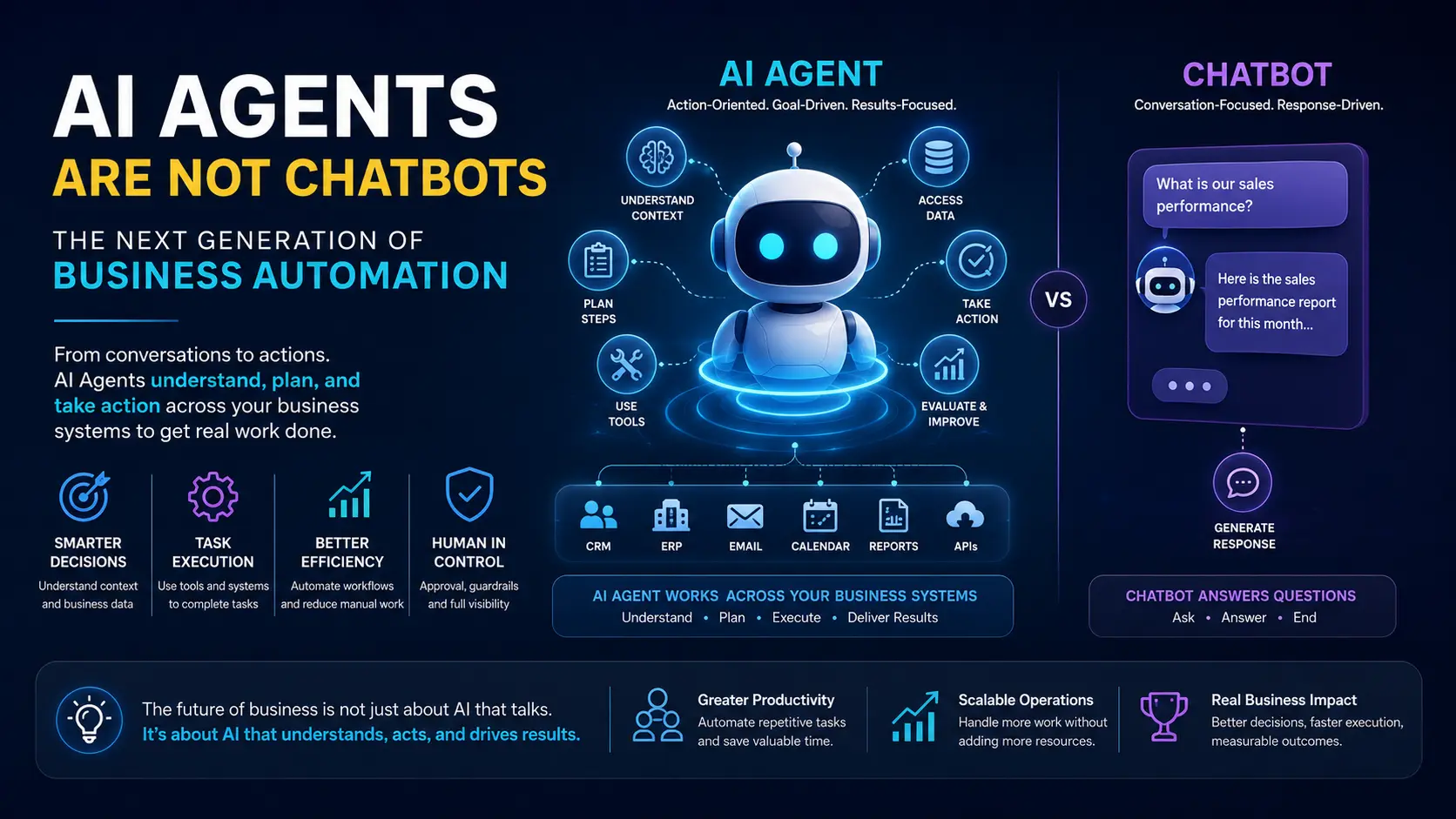
AI agents can perform multi-step tasks rather than simply generating responses.
A production agent may need to:
Understand a user objective
Plan tasks
Call tools
Access business systems
Execute actions
Validate results
Request human approval when necessary
As agent workflows become more complex, engineering and testing requirements increase.
Custom Machine Learning Development
Machine learning projects may require:
Data preparation
Feature engineering
Model development
Training
Evaluation
Deployment
Monitoring
The amount and quality of training data can have a major impact on project scope.
AI Development Cost: MVP vs Enterprise
One of the most important distinctions is whether you are building an MVP or a production enterprise system.
AI MVP
An MVP focuses on validating the core concept.
It typically prioritizes:
Essential functionality
Fast development
Limited integrations
Small user base
Proof of business value
The goal is:
Build → Test → Learn → Improve
Enterprise AI Solution
An enterprise implementation generally requires much more than an MVP.
It may require:
Advanced security
Multiple integrations
Scalable infrastructure
Monitoring
Governance
Role-based access
Data controls
Reliability testing
High availability
Ongoing support
Therefore, comparing the price of an AI MVP with an enterprise AI platform is not meaningful without considering the differences in scope.
AI Development Team Structure
The team required for an AI project also affects cost.
Depending on the project, a development team may include:
AI/ML engineer
Backend developer
Frontend developer
Data engineer
Cloud/DevOps engineer
UI/UX designer
QA engineer
Product manager
Solution architect
A smaller proof of concept may need only a few specialists.
A complex enterprise project may require a multidisciplinary team.
In-House AI Development vs Hiring an AI Development Company in India
Businesses generally have two options.
Build an In-House Team
This gives the organization direct control over hiring, architecture, development, and long-term operations.
However, it can involve:
Recruitment costs
Salaries
Infrastructure
AI expertise requirements
Management overhead
Longer team-building timelines
Hire an AI Development Company
An external development partner can provide access to an established engineering team without requiring the company to build the entire AI team internally.
This can be attractive for businesses that:
Need specialized AI expertise
Want to validate an AI idea quickly
Have limited internal AI resources
Need an MVP
Need enterprise integrations
Want long-term development support
The right choice depends on the company's existing capabilities and long-term strategy.
How to Reduce AI Development Costs
Reducing cost does not mean choosing the cheapest development company.
Instead, focus on reducing unnecessary complexity.
Start With a Clear Use Case
Define the business problem before choosing technology.
Build an MVP
Validate the most important functionality before developing every planned feature.
Use Existing AI Models Where Appropriate
Not every business needs to build a proprietary model.
Reuse Existing Infrastructure
Integrating with existing systems can sometimes be more efficient than replacing them.
Prioritize High-Value Features
Focus development resources on capabilities that directly affect business outcomes.
Plan for Scalability
Avoid unnecessary enterprise complexity in an early MVP, but design the architecture so that it can evolve as the product grows.
How to Calculate AI Project ROI
AI development should be evaluated based on business value, not just development cost.
For example, consider:
Current annual operational cost
minus
Expected annual cost after automation
plus
Additional revenue or productivity gains
compared with
AI development and ongoing operating costs
Potential ROI metrics include:
Employee hours saved
Reduced processing costs
Increased sales
Faster customer response
Reduced errors
Increased conversion
Improved customer retention
A project with a higher initial development cost can still be the better investment if it produces significantly greater business value.
Questions to Ask Before Getting an AI Development Quote
Before requesting proposals, define:
What business problem are we solving?
Who will use the AI solution?
What data is available?
Which systems need integration?
What should the AI be able to do?
What level of accuracy is acceptable?
What security requirements exist?
Do we need an MVP or production system?
What user volume do we expect?
What metrics will determine success?
Providing this information allows an AI development company to produce a much more realistic estimate.
How to Choose an AI Development Company in India
Cost should not be the only selection criterion.
Evaluate potential partners based on:
AI engineering experience
Relevant case studies
Software development capabilities
Architecture expertise
Data engineering
Security practices
Integration experience
AI evaluation methodology
Communication
Post-launch support
A development partner that provides a very low initial quote may ultimately cost more if the architecture requires extensive rework or the solution cannot scale.
The better question is:
Which partner can deliver the required business outcome reliably at an appropriate total cost?
Why AI Development Costs Vary Between Companies
Two companies can quote very different prices for the same high-level AI project.
That does not necessarily mean one is overcharging.
Differences may come from:
Team experience
Architecture quality
Development methodology
Security standards
Testing depth
Integration scope
Documentation
Support
Infrastructure planning
When comparing proposals, compare scope and deliverables, not just the final number.
AI Development Cost in India: What Should Businesses Budget For?
A realistic AI budget should consider both initial development costs and ongoing operating costs.
Initial costs can include:
Discovery
Architecture
UI/UX
Development
Data engineering
AI integration
Testing
Deployment
Ongoing costs may include:
AI model usage
Cloud infrastructure
Monitoring
Maintenance
Security updates
Model optimization
New feature development
A sustainable AI strategy therefore looks at total cost of ownership, not only the initial development quotation.
Frequently Asked Questions
What is the average AI development cost in India?
There is no universal average because AI projects vary substantially in complexity. A proof of concept, AI MVP, custom application, and enterprise AI platform can have very different development requirements.
Is AI development cheaper in India?
India can offer competitive access to software and AI engineering talent, but the final cost depends on project scope, expertise, architecture, integrations, security, and support requirements.
How much does an AI chatbot cost to develop?
The cost depends on whether the chatbot uses predefined responses, an LLM, RAG, business-system integrations, authentication, analytics, human escalation, and other production features.
How much does an AI agent cost?
AI agent development costs depend on the number of tasks the agent performs, tools and APIs it can access, workflow complexity, data requirements, security, evaluation, and human approval requirements.
Is building an AI MVP cheaper than a full AI product?
Yes, an MVP generally has a narrower scope and is designed to validate the concept before significant investment is made in a larger production system.
How can I get an accurate AI development cost estimate?
Start by defining the business problem, users, required AI capabilities, data sources, integrations, security requirements, and desired outcome. An AI development company can then assess the scope and provide a more meaningful estimate.
Conclusion
There is no single answer to the question “What is the AI development cost in India?”
The right budget depends on the type of AI solution, development complexity, data, integrations, security requirements, infrastructure, team composition, and long-term support.
For businesses, the best approach is to start with the business problem, define measurable outcomes, validate the idea through an MVP or proof of concept where appropriate, and then scale the solution based on real-world results.
Instead of choosing an AI development partner purely because they offer the lowest quote, evaluate the total value, technical capability, scalability, security, and long-term support they can provide.
Build Your AI Solution With TriggrsWeb
If you are evaluating an AI project and need help determining the right architecture, development scope, or implementation roadmap, TriggrsWeb can help assess your requirements and design an AI solution around your business objectives.
Related AI Development Resources
Learn more about our AI development company in India
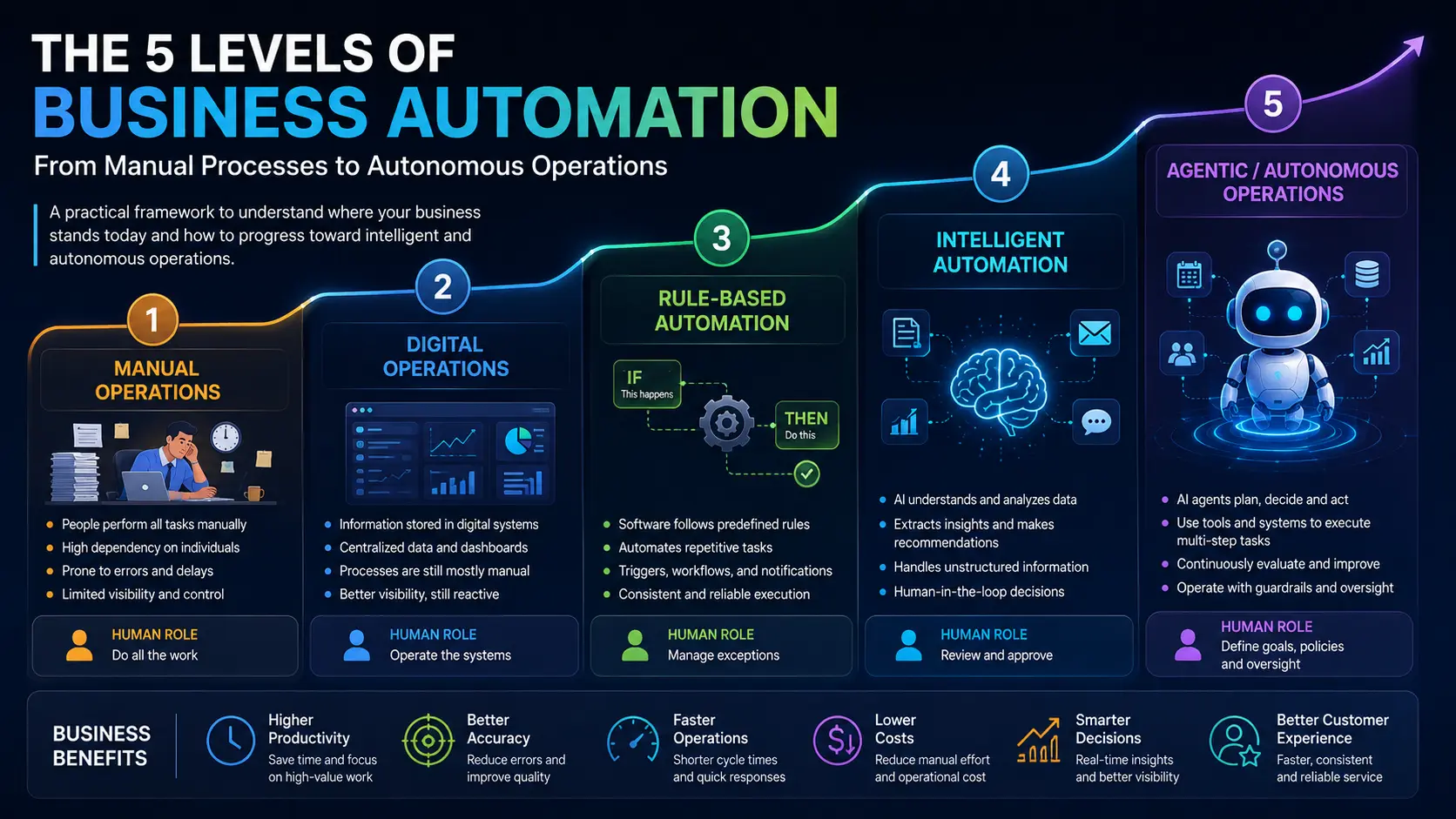
Read about this 5 Levels of Business Automation: From manual processes to autonomous operations